Fatty liver is often detected during an ultrasound or routine blood test even when a person feels healthy. A 2022 systematic review covering 23,581 Indian adults estimated the pooled prevalence at 38.6%. It was 28.1% in average-risk adults and 52.8% in high-risk groups, showing the strong link with obesity, diabetes and metabolic problems.
If an ultrasound mentions Grade 1, Grade 2 or Grade 3 fatty liver, the main concern is how serious it is and whether it can be reversed. A liver specialist in Rudrapur can interpret the report with blood tests and fibrosis risk. Patients may also need evaluation at a gastro hospital in Rudrapur, consultation with an internal medicine specialist in Rudrapur, a preventive health checkup in Rudrapur or coordinated care at a multispeciality hospital in Rudrapur.
What Does Fatty Liver Actually Mean?
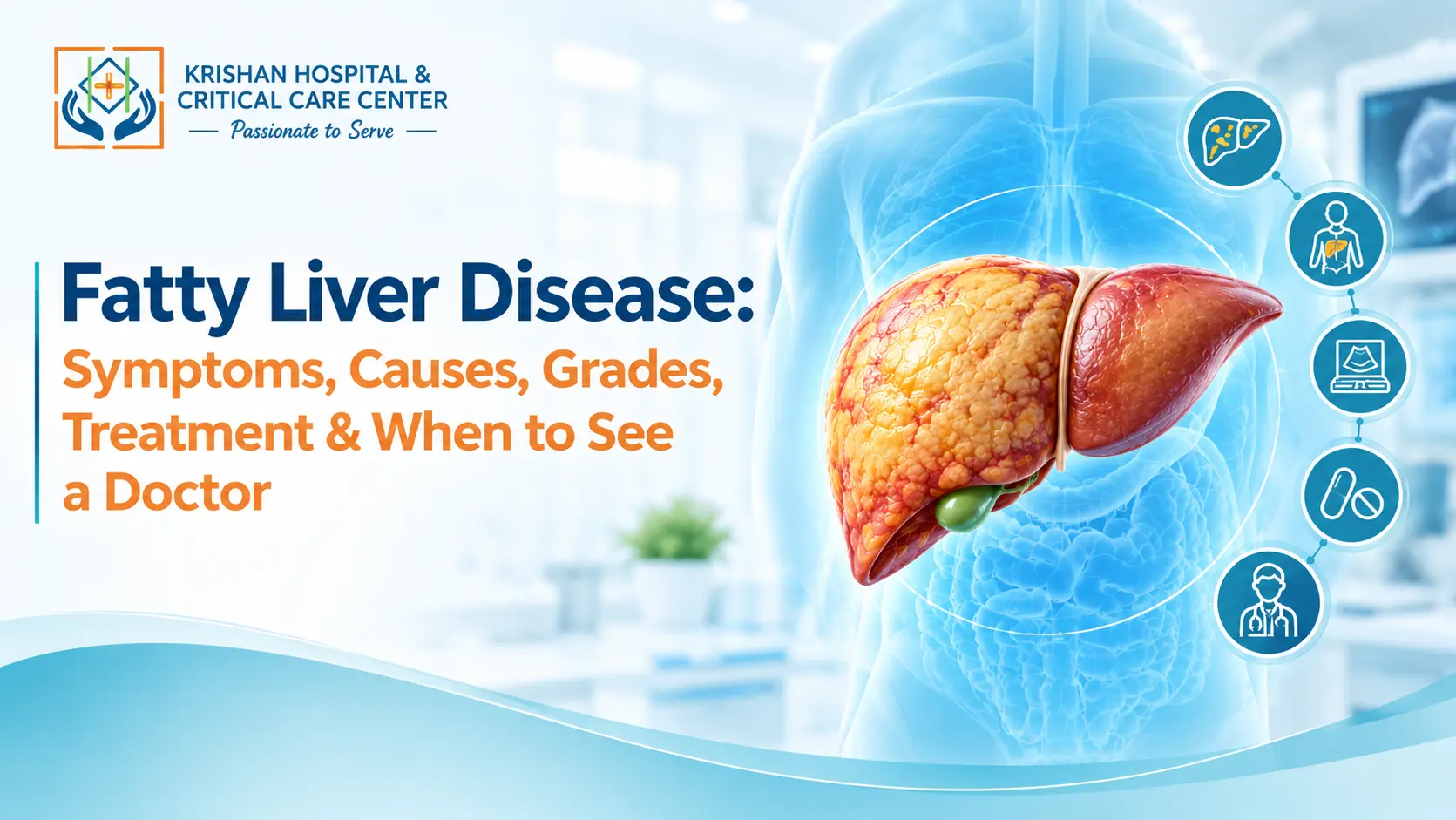
Fatty liver develops when excess fat accumulates inside liver cells. The common metabolic form is now called Metabolic Dysfunction-Associated Steatotic Liver Disease, or MASLD, which replaced NAFLD in 2023. It is linked with obesity, diabetes, high blood pressure and abnormal blood lipids. In some people, it can progress to inflammation, fibrosis and cirrhosis.
Fatty Liver Grade 1, Grade 2 and Grade 3 Explained
Ultrasound commonly classifies fatty liver as Grade 1, Grade 2 or Grade 3, representing mild, moderate and severe fat accumulation. These grades describe fat on imaging; they do not directly measure inflammation or scarring.
Grade 1 Fatty Liver – Mild
Grade 1 is the mildest ultrasound grade. A relatively small amount of excess fat is present, and permanent liver damage is not automatically implied. Weight control and physical activity may help reduce liver fat.
Grade 2 Fatty Liver – Moderate
Grade 2 indicates moderate fat accumulation and needs more attention, especially with diabetes, obesity, hypertension, high triglycerides or abnormal liver enzymes. It still does not show how much fibrosis has developed.
Grade 3 Fatty Liver – Severe
Grade 3 represents severe fat accumulation and should not be neglected, but it does not automatically mean cirrhosis. A liver specialist in Rudrapur may advise liver function tests, platelet count, a fibrosis score or elastography. Evaluation at a gastro hospital in Rudrapur may also be recommended when advanced disease is suspected.
Which Fatty Liver Grade Is Good or Bad?
There is no “good” fatty liver grade because a healthy liver should not contain excessive fat. Grade 1 is mildest, Grade 2 moderate and Grade 3 severe. However, the grade should still be considered along with fibrosis assessment.
Fatty Liver Grade Is Not the Same as Liver Fibrosis Stage
Fatty liver grading describes fat, while fibrosis staging describes scarring. Fibrosis is commonly classified from F0 to F4: F0 means no significant fibrosis, F1 mild fibrosis, F2 significant fibrosis, F3 advanced fibrosis and F4 cirrhosis.
Clinical guidance recommends FIB-4 for initial risk assessment. In adults, a FIB-4 below 1.3 generally indicates low probability of advanced fibrosis, while 1.3 or above usually prompts further assessment such as elastography. An internal medicine specialist in Rudrapur can assess metabolic risks, while a health checkup in Rudrapur can help identify them early.
Can Grade 1, Grade 2 or Grade 3 Fatty Liver Be Reversed?
In many patients, liver fat can be reduced, especially before advanced fibrosis or cirrhosis develops. NIDDK notes that losing around 3% to 5% of body weight can reduce liver fat, while about 7% to 10% weight loss may help reduce liver inflammation and fibrosis.
Weight loss should be gradual, because rapid weight loss and malnutrition may worsen liver disease. A liver specialist in Rudrapur can decide whether lifestyle changes are enough or further tests are needed. An internal medicine specialist in Rudrapur can help manage diabetes, obesity, hypertension and cholesterol.
What Tests Are Needed After Fatty Liver Is Found?
Doctors may recommend ALT and AST, platelet count, blood glucose or HbA1c, cholesterol and triglycerides, blood pressure, BMI and waist circumference. FIB-4 uses age, AST, ALT and platelet count to estimate fibrosis risk. If the result is not low-risk, elastography may be considered.
Normal liver enzymes do not always exclude significant fibrosis. A regular health checkup in Rudrapur can be useful for people with metabolic risks, while a multispeciality hospital in Rudrapur can coordinate investigations when required.
What Are the Symptoms of Fatty Liver?
Fatty liver often causes no symptoms early. Possible symptoms include tiredness, weakness or heaviness in the upper-right abdomen. Advanced disease may cause jaundice, abdominal swelling, confusion or excessive drowsiness.
Best Diet and Lifestyle for Fatty Liver
Meals should generally include vegetables, fruits, whole grains, pulses, legumes, nuts, seeds and adequate protein, while sugary drinks, refined carbohydrates, fried and highly processed foods should be limited. Exercise can benefit fatty liver even without major weight loss. People with diabetes, kidney disease, hypertension or obesity may need personalised advice. Coordinated evaluation through a gastro hospital in Rudrapur and a multispeciality hospital in Rudrapur may help when several conditions coexist.
Who Is at Higher Risk of Fatty Liver Progression?
People with type 2 diabetes, obesity, high triglycerides, abnormal cholesterol, high blood pressure and metabolic syndrome are at higher risk. The Indian meta-analysis found fatty liver in 52.8% of high-risk adults compared with 28.1% of average-risk adults.
Paired-biopsy research found fibrosis progression averaging roughly one stage every 14 years in simple fatty liver and about every seven years in steatohepatitis. These are population averages, but they underline the importance of follow-up.
When Should You See a Doctor for Fatty Liver?
Medical evaluation is advisable when ultrasound shows Grade 2 or Grade 3 fatty liver, liver enzymes remain elevated, or fatty liver occurs with diabetes, obesity, high triglycerides, high cholesterol or metabolic syndrome.
Jaundice, abdominal swelling, vomiting blood, black stools, confusion or unusual drowsiness require urgent medical attention. A liver specialist in Rudrapur should be considered when abnormalities persist or fibrosis is suspected. An internal medicine specialist in Rudrapur can help with associated metabolic conditions. A timely health checkup in Rudrapur may identify abnormalities early.
Why Choose Krishan Hospital, Rudrapur for Fatty Liver Evaluation?
Fatty liver is often linked with obesity, diabetes, cholesterol abnormalities and high blood pressure. At Krishan Hospital, Rudrapur, patients can access consultation, diagnostic evaluation and care across multiple specialties.
For patients looking for a gastro hospital in Rudrapur, evaluation can help determine whether the condition is limited to liver fat or needs fibrosis assessment. Patients seeking an internal medicine specialist in Rudrapur can also be evaluated for diabetes, blood pressure, cholesterol and obesity. Krishan Hospital also provides a health checkup in Rudrapur for screening and follow-up. As a multispeciality hospital in Rudrapur, coordinated care can be provided when several conditions need attention.
The Right Evaluation Can Make a Difference in Fatty Liver Management
Fatty liver Grade 1, Grade 2 and Grade 3 describe mild, moderate and severe fat accumulation on ultrasound, but they do not show how much scarring has developed. The key long-term question is whether inflammation or fibrosis is present.
Weight management, regular physical activity, balanced nutrition and control of diabetes, cholesterol, triglycerides and blood pressure can improve liver health. If fatty liver has been detected, a multispeciality hospital in Rudrapur can support coordinated evaluation, while a liver specialist in Rudrapur or further assessment at a gastro hospital in Rudrapur may be required when persistent abnormalities or fibrosis risk need closer evaluation.
Frequently Asked Questions About Fatty Liver
1. Is fatty liver dangerous?
Early fatty liver is not always dangerous, but it can progress in some people to inflammation, fibrosis and cirrhosis. Risk may be higher with obesity, diabetes and metabolic conditions. A liver specialist in Rudrapur can help assess whether inflammation or scarring is present.
2. How to reverse fatty liver naturally?
Gradual weight loss, regular exercise, better blood sugar and cholesterol control, and reducing sugary drinks, refined carbohydrates and processed foods can help. Avoid crash diets and unverified detox products. An internal medicine specialist in Rudrapur can help create a safe lifestyle plan.
3. What are the symptoms of fatty liver?
Many people have no symptoms. When symptoms occur, fatigue, weakness and mild upper-right abdominal discomfort are common. Advanced disease may cause jaundice, swelling or confusion. Evaluation at a gastro hospital in Rudrapur can help determine whether symptoms are liver-related.
4. What does Grade 1/2/3 fatty liver mean?
Grade 1 indicates mild fatty change, Grade 2 moderate change and Grade 3 more severe fat accumulation on ultrasound. These grades do not directly show fibrosis or scarring. A health checkup in Rudrapur may include blood tests and further assessment when needed.
5. What foods should I avoid with fatty liver?
Limit sugary beverages, sweets, packaged juices, refined flour, fried foods, highly processed foods and excess saturated fat. Alcohol should be discussed with a doctor. A multispeciality hospital in Rudrapur may offer personalised dietary guidance when other conditions are present.
6. Does fatty liver cause stomach pain?
Fatty liver may cause a dull ache or heaviness in the upper-right abdomen, but significant or persistent stomach pain is not typical. Gallstones, acidity, pancreatitis and other gastrointestinal conditions can cause similar symptoms and should be evaluated.
7. What are the first signs of fatty liver?
There may be no early signs. Fatty liver is often found incidentally on ultrasound or through mildly abnormal liver enzymes. Some people report fatigue or vague abdominal discomfort. Those with obesity, diabetes or high triglycerides may benefit from periodic screening.
8. What is the best diet for fatty liver?
A sustainable diet rich in vegetables, whole fruits, pulses, whole grains, nuts, seeds and lean proteins is generally best. Added sugar, refined carbohydrates, sugary drinks and highly processed foods should be reduced. People with persistent abnormalities can also seek assessment at a gastro hospital in Rudrapur.
Book a Consultation at Krishan Hospital, Rudrapur
If you have been diagnosed with fatty liver, have abnormal liver tests or persistent digestive or metabolic concerns, do not wait for symptoms to worsen. Early evaluation can help identify the stage of the condition and reduce future complications.
Book a consultation at Krishan Hospital, Rudrapur for appropriate evaluation, personalised guidance and follow-up care.